Hedge Trimming in Northolt for neat, healthy boundaries

Hedge Trimming Northolt provides a straightforward way to keep boundary planting tidy, balanced and manageable throughout the year. Our hedge trimming service focuses on shaping growth, reducing overreach and maintaining clear lines along gardens, frontages and shared edges. Whether the hedge is ornamental, privacy-focused or part of a larger garden layout, the aim is a clean finish that suits the plant type and the space it occupies.
We work with the practical details that matter to customers: regular maintenance, seasonal cutbacks and careful shaping where a hedge has started to spread wider or taller than intended. In many cases, a planned trim helps preserve the hedge’s appearance while keeping paths, drives and light levels more comfortable to use. If you need a tidier, more controlled result, our service is designed around that outcome.
For a more detailed look at the wider work we can support, see our services overview. If you are comparing options for gardens that need more than trimming alone, the page on garden maintenance explains how routine upkeep can be planned across different parts of the outdoor space. You can also request a quote once you have a clear idea of the hedge work you need.
Hedge shaping and routine control
Hedges respond best to steady attention rather than drastic correction. Routine trimming helps maintain a consistent profile and avoids the uneven, patchy look that can appear when growth is left too long between visits. For some gardens the priority is symmetry, while for others it is simply keeping a line straight and the top level. Our approach is based on the hedge’s existing form, the plant species and the finish you want to keep in place.
Different hedges call for different handling. Dense evergreen screens may need careful reduction to avoid exposing bare inner growth, while lighter deciduous hedges may benefit from a neater seasonal cut. We also consider access along the hedge line, the desired height and whether the boundary should remain formal or more natural. If you are unsure how much to reduce, it is often best to start conservatively and then refine the shape.
Useful factors when planning a trim often include:
- the hedge’s current height and width
- how much light or clearance you want to restore
- whether the hedge forms a front boundary, rear screen or side divide
- the plant type and how strongly it regrows
- any nearby features such as paths, fences or planting beds
Regular maintenance for domestic and shared gardens
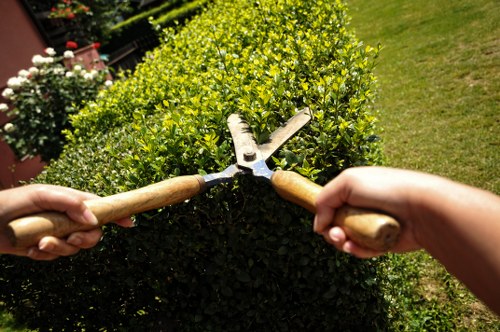
Regular maintenance keeps hedges easier to manage than occasional heavy cutting. Small, planned trims usually preserve the shape better and can reduce the need for more disruptive correction later on. This matters especially where a hedge frames an entrance or sits close to neighbouring property boundaries, because a neat edge can make the whole garden feel more orderly without changing the planting character.
If a hedge has several sections with different growth patterns, we can treat each area on its own terms. One side may need a simple surface trim, while another may need careful reduction to recover a clean line. We also take account of gateways, fence panels, retaining edges and planted borders so the finished result sits properly within the rest of the garden. Hedge trimming is most effective when the cut follows the hedge’s structure rather than forcing it into an unnatural shape.
For customers who are planning broader outside work at the same time, the garden clearance page covers situations where hedges sit alongside overgrowth, leaf build-up or general tidying. That can be useful if the hedge is only one part of a wider refresh and you want the garden brought back under control in a single planned visit.
Shaping, reduction and boundary management
Not every hedge needs the same finish. Some benefit from crisp lines and a level top; others look better when they are subtly eased back without making the sides too abrupt. Reduction work is useful when branches have extended beyond the intended boundary, especially where access is being affected or the hedge has begun to dominate a smaller space. The goal is always to keep the hedge healthy-looking and proportionate.
Boundary management can also involve practical decisions about where the hedge meets hard landscaping, lawn edges or planting beds. A well-handled cut helps maintain a clear border and can make future upkeep more straightforward. When hedges form part of a longer run, we look at consistency across the whole length so one section does not appear noticeably heavier than the next. That attention to line and balance is often what makes the finished result feel professionally maintained.
If your garden also includes timber structures or paved seating areas nearby, it may help to look at related outdoor services such as decking services or landscaping where a broader outdoor scheme is being improved alongside the hedge. These pages are useful when you are planning the hedge work as part of a wider garden project rather than as a one-off trim alone.
How we prepare a hedge trimming quotation

When a customer asks for a quotation, the most helpful details are usually the hedge’s approximate size, its location in the garden and the general finish you want. A photo can be useful if the hedge has a mixed shape or if access is tight, but it is not the only way to describe the work. Clear notes about whether you want a light tidy, a substantial reduction or simple ongoing maintenance are often enough to begin a sensible estimate.
Access and layout also affect how the work is planned. For example, a hedge that runs along a narrow side return may need a different approach from one with open access on both sides. Similarly, a hedge overhanging a path, driveway or shared fence may need more careful control to keep the work neat as it progresses. If you already know the rough length of the hedge, that can help too, but we can usually work from practical descriptions rather than technical measurements.
To make the process efficient, try to note the hedge type, whether any sections are particularly high or wide, and whether the garden has features that need to be protected. Once that basic information is available, it is much easier to shape a fair quotation around the actual scope of work rather than guess at it.
Choosing the right level of cutting
Some hedges only need a tidy top and sides, while others need a more considered reduction to bring them back within the space available. Choosing the right level of cutting depends on the current condition of the hedge and how it is used. Privacy hedges, for example, often need a balance between maintaining coverage and keeping the growth under control, whereas decorative hedges may be cut more tightly to preserve a sharper outline.
There are also times when a hedge should be eased back in stages rather than reduced heavily in one visit. This can be important where the hedge has become very overgrown or where you want to retain as much healthy structure as possible. A measured approach allows the hedge to remain attractive while moving it towards a better size and shape over time. That is often the most sensible route for established boundaries.
For customers comparing broader plant and garden care options, landscape gardening may be relevant where the hedge forms part of a larger reworking of the outdoor space. Where the work is mostly about keeping lawns tidy beneath or around the hedge line, lawn mowing can also be useful to consider alongside trimming so the whole area feels finished rather than partly maintained.
About Northolt
Northolt is a district in the London Borough of Ealing in west London, long associated with transport links, suburban housing and a mix of older and newer development. The name is historically linked to the settlement recorded in earlier centuries, and the area has grown from rural origins into a busy residential part of the capital. Northolt station on the Central line provides an important connection, while the nearby Grand Union Canal and the A40 corridor reflect the way movement and infrastructure have shaped the district over time. The local landscape includes stretches of parkland, everyday shopping streets and residential roads where tree-lined plots and private gardens remain a noticeable part of the character.
One of the best-known green spaces is Northala Fields, created on land associated with former gravel workings and now recognised for its distinctive raised mounds and open recreational layout. The area also sits close to longer established features of west London history, including parts of the old parish pattern that once defined the district before modern borough boundaries. Northolt Park and surrounding open spaces add to the sense that this is a place where built-up streets and accessible outdoor space exist side by side. The local built environment is varied, with interwar and post-war housing sitting alongside newer developments, schools, community facilities and transport-related sites. That mix gives Northolt a practical suburban identity rather than the feel of a single architectural style.
For residents and visitors, the area’s appeal lies in its balance of convenience and greenery. The canal corridor, nearby parks and the network of residential streets create a setting that is firmly urban yet still open in places. Northolt is also close to other west London districts, but it retains a clear local identity through its station, its road links and its established neighbourhood pattern. This combination of transport access, domestic housing and open ground has helped shape a place that is familiar, functional and layered with different periods of growth.
Seasonal timing and hedge condition
Different hedges tend to present different conditions across the year, so the timing of trimming can influence both appearance and maintenance effort. Some hedges are best kept on a steady schedule with lighter cuts, while others can tolerate a more definite reduction after a period of rapid growth. What matters most is matching the work to the hedge’s condition rather than applying the same finish everywhere. A hedge that has been left too long may need patience and shaping to recover a balanced outline.
Condition also affects the visual result. If growth is thin in places, a heavy cut may expose more than you want, whereas a healthier, denser hedge can usually be trimmed with more freedom. Where a hedge is already uneven, attention to the line of the top and the depth of the sides can make a notable difference. Tree lopping and removal may be relevant if nearby trees are casting shade or interfering with the hedge, although hedge trimming remains a separate task and is always assessed on its own merits.
When a hedge is integrated into a wider garden plan, the aim is not only tidiness but continuity. Keeping the hedge aligned with surrounding planting, paving and borders helps the garden read as one coherent space. That is why the finish should suit the hedge itself rather than follow a generic standard cut. Good trimming is as much about proportion as it is about removing growth.
Practical planning for a neat result

Careful planning helps the trimming work run smoothly and keeps the end result close to what was expected. It is useful to think about where the hedge begins and ends, whether there are any awkward corners, and if both sides are accessible. Some customers want a precise formal edge; others are more interested in keeping the hedge healthy, legible and under control. Either way, the finish should be consistent from one section to the next.
We also pay attention to what sits immediately around the hedge. Nearby planting, lawn edges, trellis, fencing and paving all influence how cleanly the cut can be carried out and how visible the final line will be. In some gardens, the hedge is the defining feature; in others it is a background structure that needs to stay neat without drawing attention. That distinction matters, because the best finish is the one that fits the garden rather than competing with it.
If you are ready to move forward, you can request a quotation now and outline the hedge work you want completed. For wider garden projects, our landscaping and garden maintenance pages can help you see how hedge trimming fits alongside other outdoor improvements before you make a decision.
From tidy refresh to ongoing upkeep
Some customers need a one-off tidy before a season change, while others prefer ongoing upkeep to keep the hedge in the same condition throughout the year. Both approaches can work well; the right one depends on the hedge species, the speed of growth and the look you want to preserve. A hedge that is used as a formal boundary usually benefits from steadier attention than one left to develop a softer outline.
Ongoing trimming is often easier to manage than infrequent heavy work because it preserves shape and avoids major correction later. Even so, there are times when a hedge needs a more substantial reset before it can return to routine maintenance. That may involve reducing bulk, straightening the line or restoring access along a path or edge. The key is to keep the hedge practical without losing the character that made it useful in the first place.
For a simple next step, send over the details that describe the hedge and the finish you want. If you would like to compare related pages first, pricing and quotes gives a helpful starting point for understanding how estimates are prepared, and contact us is the place to use when you are ready to ask for a quotation.